.png)


Toronto Real Estate in 2026: What the Headlines Won't Tell You

Gary McGowan and mortgage broker Dion Beg break down the renewal wave, power of sale spike, and why some buyers are actually making moves right now.
If you have been watching the news lately, you would think Toronto real estate is either on the verge of a full recovery or headed off a cliff. According to Gary McGowan and mortgage broker Dion Beg of Kanga Mortgage, neither version is quite right.
In a recent episode of RealtyChatter, the two sat down to go through the real numbers, the kind that actually matter if you own a home, are thinking about buying, or are just trying to make sense of what is happening in the Ontario market right now.
Here is what they covered.
Why 2026 Is the Year of Mortgage Renewals
Canada is currently experiencing the highest volume of mortgage renewals on record, and according to Dion, it is not a coincidence.
In 2021, buying activity exploded. Rates were at historic lows, remote work seemed permanent, and the GTA recorded its largest number of transactions ever. Those buyers locked into five-year terms — and they are all renewing right now.
Then in 2023, with rates spiking into the sixes, most homeowners refused to commit to another five-year term. They took three-year terms instead. Those three-year terms also expire in 2026.
Two massive waves landing in the same year. That is why mortgage brokers are slammed right now.
The flip side, as Dion pointed out, is that by end of 2027 renewals drop sharply — because 2022 saw far fewer purchases to begin with. This crunch is real, but it is also finite.
Power of Sale Is Up. Here Is What That Actually Means.
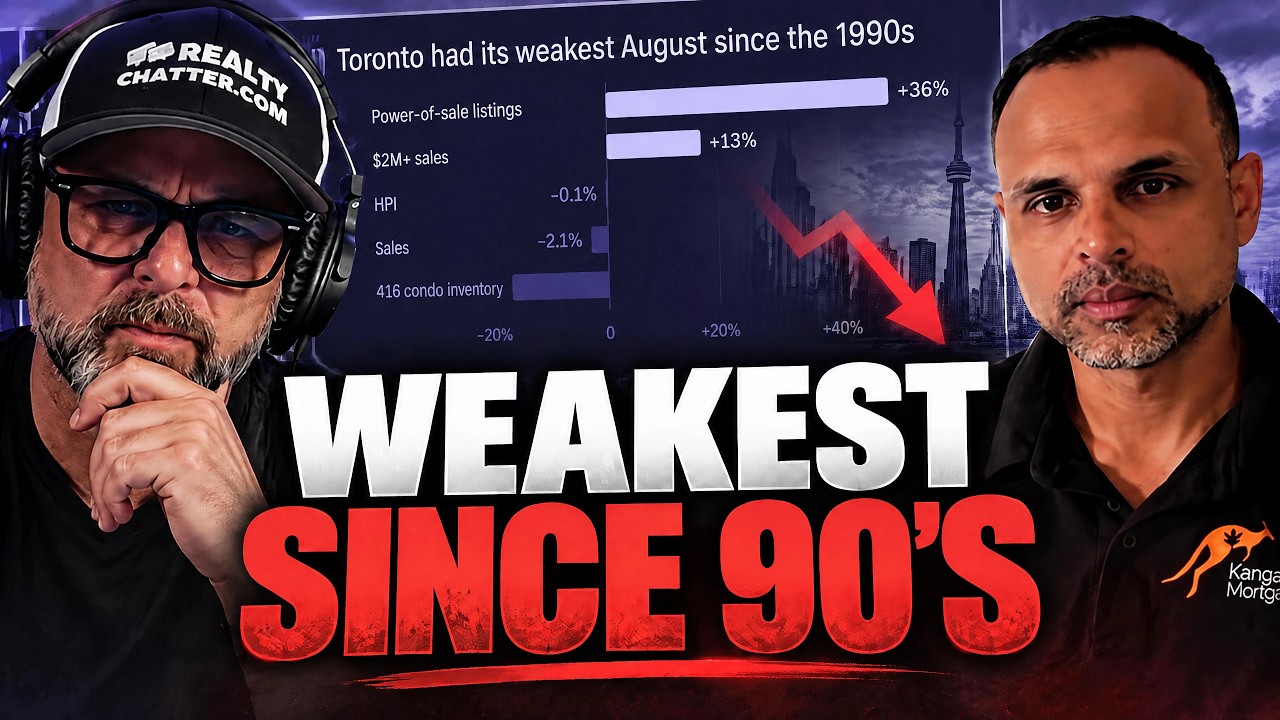
About 3% of new listings right now are power of sale — the highest that figure has been in years.
Gary and Dion walked through two specific properties flagged in a report by analyst Ben Rabidoux: one in Niagara Falls, one in Hamilton. Both were purchased at the peak in early 2022. Both recently sold at 40 to 47% below their original purchase price.
Gary's take was direct: those properties probably never should have been worth what they sold for in 2022. FOMO drove prices to levels that made no fundamental sense, and what the market is doing now is correcting for that.
Before anyone gets excited about picking up a power of sale at half off — Dion was equally direct. The bank wants out fast, but they are not giving properties away. These situations are largely isolated to buyers who got caught severely overleveraged at the worst possible moment.
3% is worth watching. It is not a crisis.
Mortgage Defaults: Better Than the US, But Watch the Trend
Canada's mortgage default rate currently sits at 0.3%. For context, the US runs around 3% on any given day. Even during the worst of the 1990s recession, Canada only reached 0.6%.
As Dion explained, Canadians will stop paying credit cards and car payments before they ever miss a mortgage payment. That cultural reality has kept default numbers remarkably contained.
But here is the number Dion flagged as the one to watch: credit card default rates are climbing. Historically, that leads mortgage defaults higher. His estimate is that Canada could hit 0.4% by end of year.
Still low. Still manageable. But the direction matters.
The broader context Gary added: for about 15 years, rising home values allowed Canadians to roll debt into their mortgage at renewal — essentially using their home as an ATM. That strategy stopped working when prices flattened and started declining. The distress stories making headlines today largely belong to people who never adjusted their financial habits when the conditions changed.
Why Right Now Might Actually Be the Best Time to Move Up
This is the part of the conversation that tends to surprise people.
Prices across Southern Ontario are down roughly 27% from peak in many markets. The average Toronto benchmark has dropped from $1.4 million to around $970,000. That is painful for anyone who bought at the top.
But for homeowners looking to sell and move into a higher-priced property, the math is actually working in their favour right now. The dollar drop on a $1.5 million home is proportionally larger than the drop on a $700,000 home. The gap to bridge is smaller than it was three years ago.
Dion's team helped two separate couples do exactly this during the week of the episode — both sold under a million and purchased closer to two. They identified the window and acted on it.
Gary's framing was simple: most people waiting for the perfect market are waiting for a headline that is never going to come. The right time is when the numbers work for your specific situation.
How First-Time Buyers Are Getting Creative
Two clients born in 2004 and 2005. Buying property in 2026.
Dion is currently working with a brother and sister, each with their respective partners — four people total — purchasing a duplex together. One couple takes the upper unit, one takes the lower. Each person contributes $1,000 per month toward a combined $4,000 payment. None of them could do it alone. Together, they are homeowners.
Gary noted he has seen this model work before. A brother and sister he worked with purchased together around 2013, built equity over six years, and when the time came to move on, he helped them sell that one property and buy two separate homes. It played out exactly as planned.
The setup does require proper legal agreements that outline each party's contribution and how equity gets divided at sale. It sounds complicated, Dion said, until you sit down with a good lawyer and work it out.
This is not a workaround. For many younger Canadians in 2026, this is simply what getting into real estate looks like.
The Bank of Canada's "Transitory" Problem
It came up, and it deserved to.
In 2021, the Bank of Canada told Canadians that inflation was transitory and that rates would remain low. People bought accordingly. Then in 2022, the Bank reversed course and raised rates by 5% in a remarkably short period of time.
As Dion put it, that guidance — and the abrupt reversal — is the origin story for much of the financial stress visible in the market today. People made decisions based on information that turned out to be wrong, and they are still living with the consequences.
The Bottom Line
The Toronto and Ontario real estate market is complicated right now. There are people under real financial pressure. There are also people making smart, strategic moves. And there is a significant amount of noise sitting between those two realities.
What Gary and Dion do every week is cut through that noise with numbers, real client stories, and straight talk about what is actually happening on the ground.
If you want to talk mortgages, reach Dion Beg at kangamortgage.ca or on Instagram at @dionbeg.
For real estate questions, connect with Gary McGowan at realtychatter.com or on Instagram at @garyamcg.

About the Author
Paige Kirkdene is Editor in Chief at RealtyChatter.com. She breaks down the Canadian real estate market for buyers, sellers, and Realtors who want straight answers, not noise. Paige works directly with Gary McGowan, bringing his 20+ years of real estate and training expertise into every article.


Comments