.png)


Toronto Prices Down 6.7% And Nobody's Talking About It (April 2026)

The TRREB numbers just dropped for March 2026, and I sat down with mortgage broker Dion Beg to go through all of it live. If you haven't watched the episode yet, here's the short version: sales are up, prices are down, bond yields just jumped, and buyers are still sitting on their hands.
Let's get into it.
Bond Yields Are Up. That's Not Good News for Fixed Rates.
We pulled up the bond yield chart live on the show and what you see is pretty telling. Yields were slowly drifting down through February, dropped nicely into March, and then shot up sharply in April.
Here's why that matters. Fixed mortgage rates follow bond yields. Not exactly, but closely. When you borrow from a bank, you're generally paying the bond yield plus somewhere between 1% and 1.5%. So when bonds spike, fixed rates follow.
Right now, most people are sitting in the 4% to high 4% range on a fixed. A few months back, there was briefly some optimism that rates starting with a "3" were coming. That window has closed, at least for now.
My opinion: the tariff situation south of the border is making bond traders nervous, and when traders are nervous, they price in risk. That risk lands on your mortgage payment.
Fixed vs. Variable: The Answer Has Flipped
Three months ago, most of Dion's clients were choosing variable. Now almost everyone is going fixed.
The uncertainty driving that shift is real. When people don't know what the economy looks like next quarter, they want a payment they can count on. A fixed rate gives you that, even if it costs a bit more right now.
One thing Dion flagged that most people miss: not everyone can even qualify for a fixed rate. The stress test on a fixed is higher than on variable, so some buyers are still forced into variable regardless of what they'd prefer. Worth knowing before you assume you have the choice.
The TRREB March Numbers: What They Actually Say
Sales came in just over 5,000 for March. That's up from around 3,000 in January and just under 3,900 in February. On the surface, that looks like momentum building.
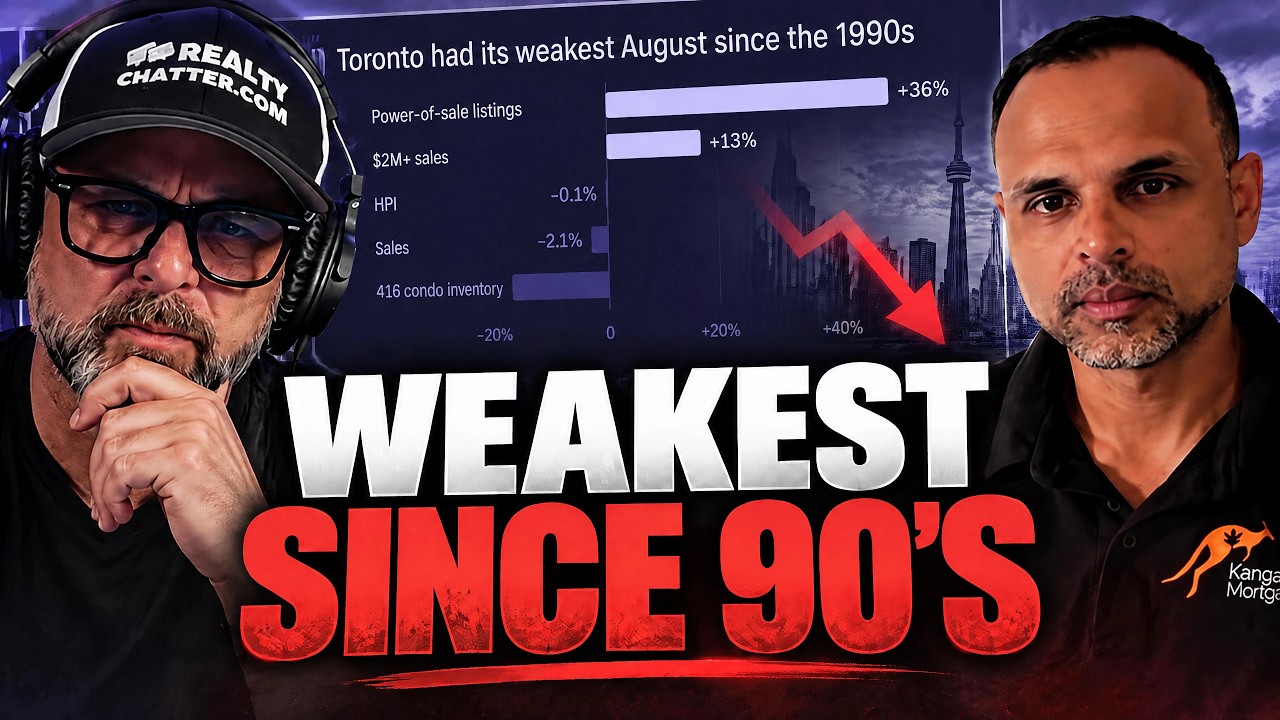
But here's the number that caught my eye: prices are down 6.7% year-over-year.
The average price across all property types in the TRREB market is sitting around $1,018,000. It briefly dipped below $1M in January, which was the first time that had happened in years. People expected that to get buyers off the sidelines. It didn't, not in a big way.
My opinion: sales ticking up slightly is not a recovery. A 6.7% price drop year-over-year tells you sellers have finally started accepting that 2021 prices are not coming back anytime soon. That acceptance is what's generating the sales activity we're seeing, not a sudden surge in buyer confidence.
Inventory Is High. Buyers Have Options.
We pulled up a live market search during the episode and the number of active listings is significant. Dion mentioned we were likely at or near record inventory levels through the first quarter of 2026.
When we talk about months of inventory, the measure that tells you whether it's a buyer's or seller's market, we were hovering around six months in January and February. Six months of inventory is technically a balanced market, but it leans buyer. And as more listings come on without a matching surge in sales, that number creeps higher.
More months of inventory means more downward pressure on price. That's not a scare tactic, that's just how supply and demand works.
What Sellers Need to Hear Right Now
If you're prepping a home to come to market, here is the most important thing I can tell you: price is the first filter.
It doesn't matter how nice your house is. If buyers scroll past it because the price is out of step with comparable sales, your home sits. And a home that sits gets stale fast.
My opinion: your realtor should be having a direct conversation with you about pricing below your competition, not matching it. If they're not having that conversation, start asking harder questions.
The sellers who are actually selling right now are the ones who've come to terms with what the market is willing to pay today, not what their neighbour got in 2021.
The Construction Mortgage Conversation Nobody's Having
We wrapped up the episode talking about something a lot of people don't think about until they're already in it: financing a custom build.
Dion walked through a real example. A client purchased a property for around $1.5M, demolished the existing house, and is building new. Total project cost around $3M. The construction loan covered $2.4M, the client put in $600K of their own money. Once the build is complete, the property gets appraised and moves to a conventional lender at a normal rate, dropping from around 9-10% during construction down to the 4% range.
The other key point Dion made: never go into a construction project with just enough money. Budget overruns are not the exception, they're the rule. His client building a $7M property in Mississauga had a $1M line of credit set up as a buffer. Turns out, his wife wanted some changes mid-build. That buffer got used.
If you're even thinking about a custom build and your bank has already told you no, that doesn't mean it's over. That's when you talk to a mortgage broker who knows how construction financing actually works.
The Bottom Line
The market is moving, but slowly and carefully. Buyers have more choices than they've had in years. Sellers who price right are selling. Sellers who don't are sitting on stale listings wondering what went wrong.
Bond yields are up, fixed rates are following, and the economic noise out of the US isn't going away anytime soon. None of that means you don't buy or sell. It means you make decisions with current information, not hope.
That's what Dion and I do every week on this show.


Comments